
To manage cash register accounting, create a Cash Register for payments just as your bank account/cash register.
● 1. Sales registrationIn practice, it is most convenient to enterdaily sales based on the cash register Z report, and to have the goods sold entered as goods/warehouse goods, as usual, or create goods that are sold only through the cash register. Sales revenue accounts and VAT logic can be set for goods via the item card and VAT class (no need to submit to ISAF).
So, you can generate a regular invoice for sales once per day/week/month according to your accounting rules. It is recommended to use numbering for cash register accounts only for the invoice. For sales, you can create a client called a “Private Person Cash Register” or similar. Select the ISAF code to prevent the account from falling into ISAF (standard “Undeclared I-SAF (21%)”)
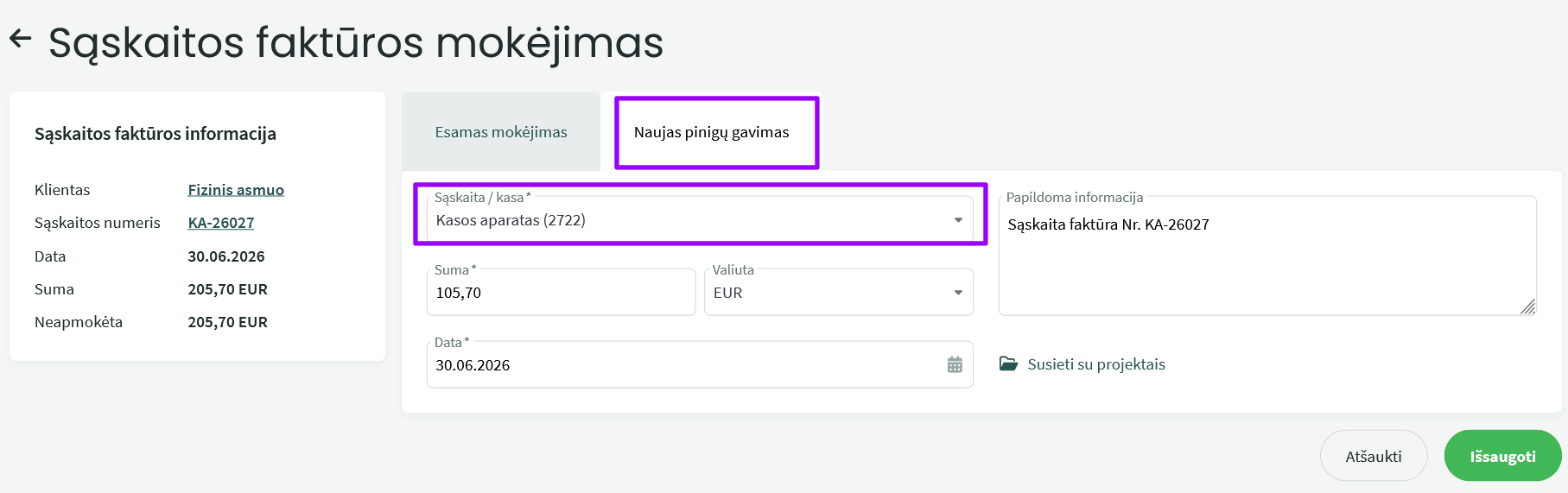
● 2. Record cash receipts in the cash registerWhen money is actually received in cash, it must be recorded in the cash register (Kasos aparatas), not directly to the bank. When marking money received through the cash register – mark the payment by selecting the Cash Register named Kasos aparatas (it can also be another one you create in the settings). If the money is received by card, select the bank account when marking the payment.
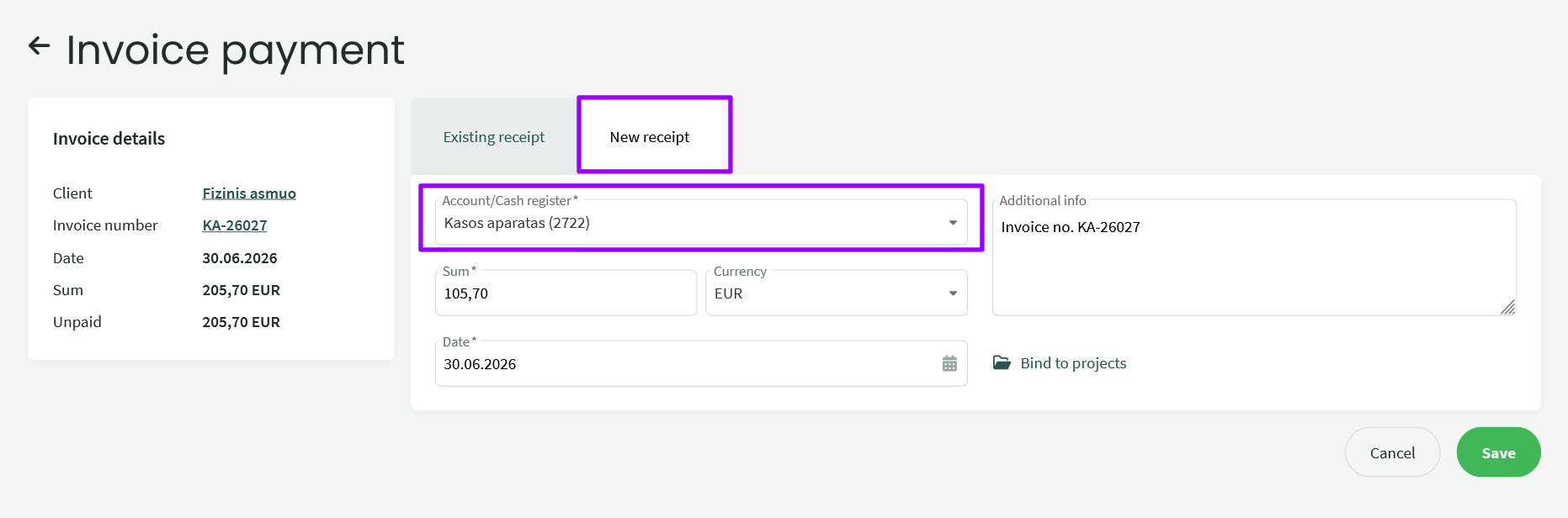
When a company pays in the store, through the cash register (cash or card), issue a regular invoice* with the appropriate ISAF code. Received cash must be recorded in the cash register (Kasos aparatas), not directly into the bank. When marking money received through the cash register – mark the payment by selecting Cash Register (see point 2), named Kasos aparatas (it can also be another one you create in the settings). If the money is received by card, select the bank account when marking the payment.
Attention *When issuing an invoice to a company, do not forget to reduce the amount of sales through the cash register! We recommend issuing a credit note for such sales.3. Transferring money from the cash register to the cash drawer
If you are talking about physically taking money from the cash register and placing it in the company’s cash register/cash drawer, from an accounting perspective, this is not new income. This is the internal transfer of money between cash storage locations.
Therefore, the logic is as follows:
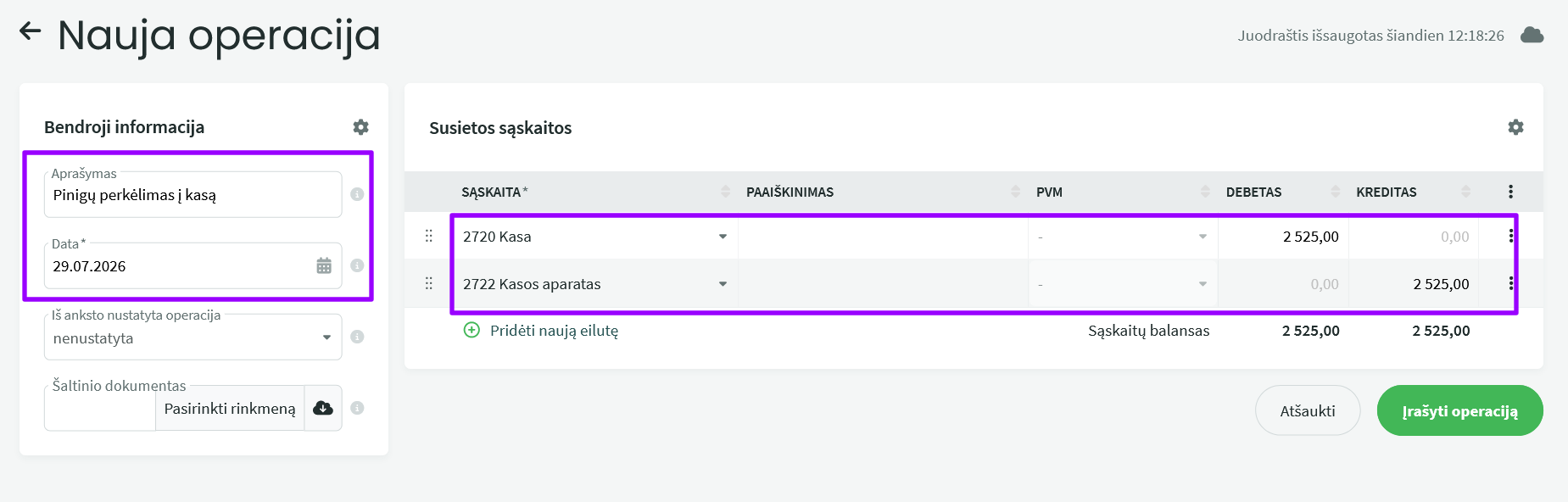
A transfer from the cash register to the company’s cash register is recorded as a cash transfer between cash accounts. If you cannot link such a transfer to an account, it should be recorded as an accounting transaction, not as income. Go to Accounting – Transactions – New transaction – record transferable amounts in debit and credit – Record transaction.
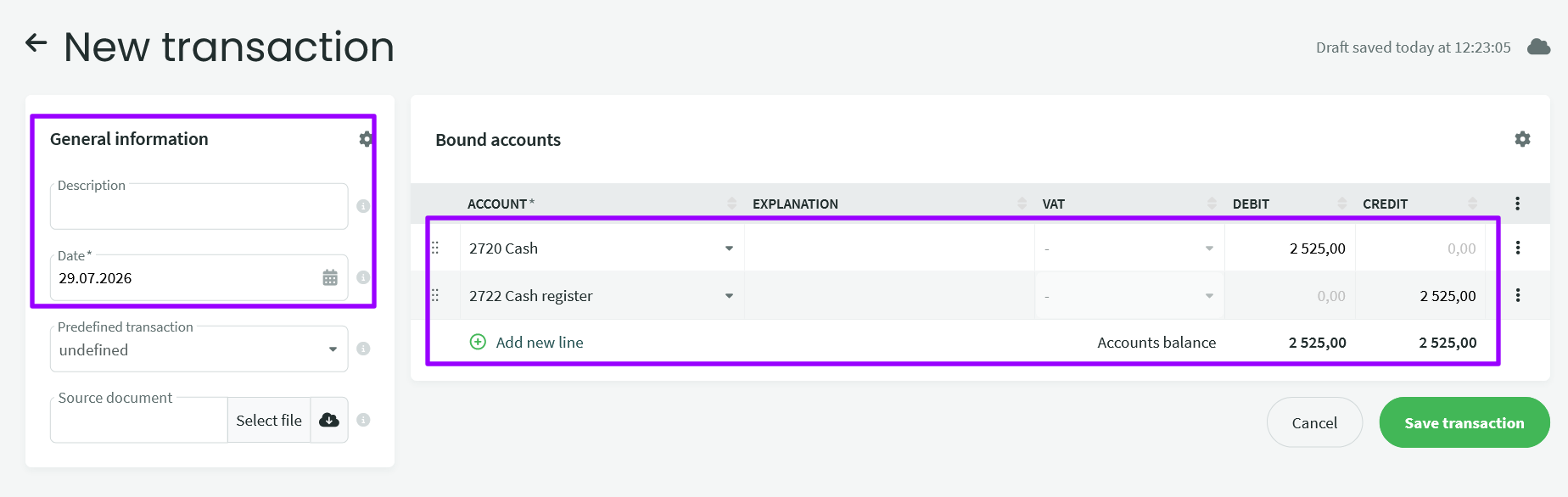
4. Depositing money into the bank
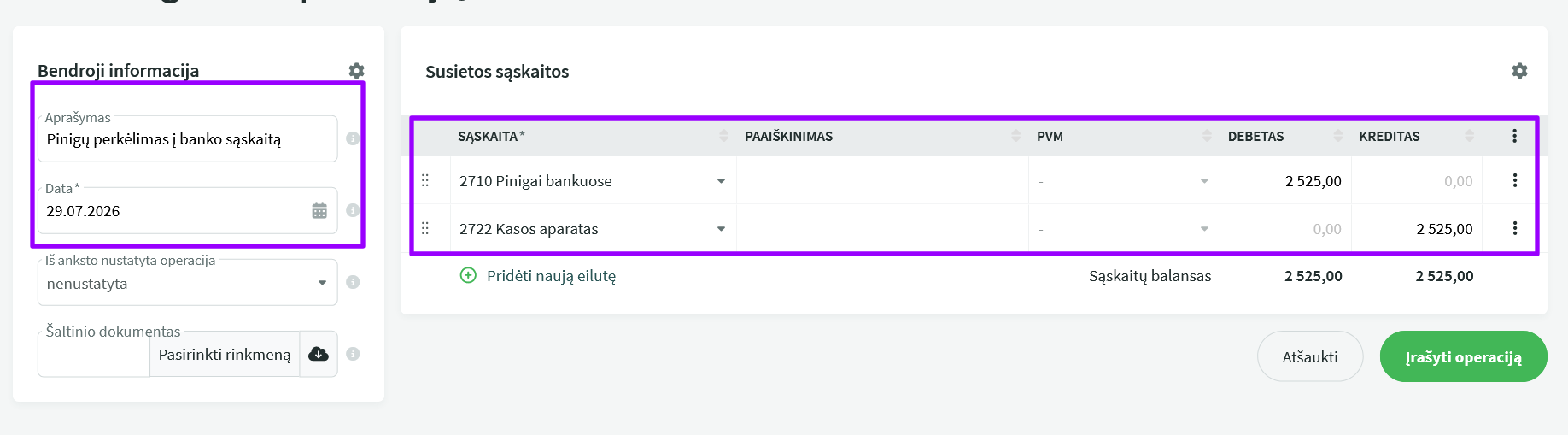
In accounting, this must be recorded as a transfer from the cash register to the bank (or first from the cash register to the cash register, and then to the bank account). Go to Accounting – Transactions – New transaction – record transferable amounts in debit and credit – Record transaction.
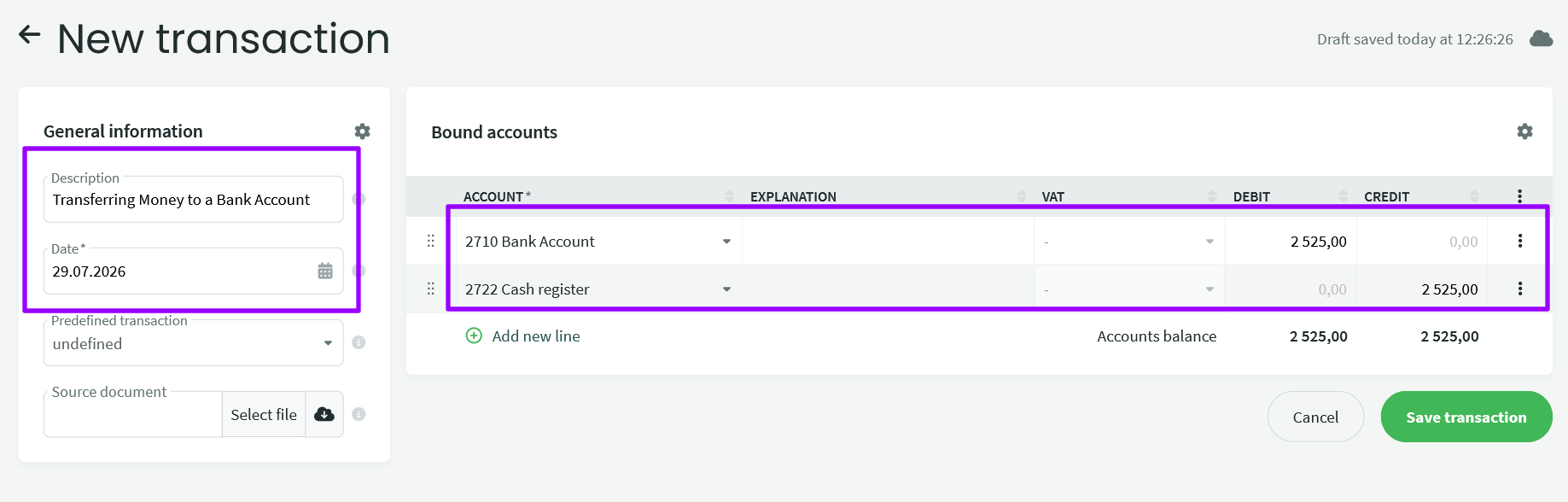
If you have additional questions, please write to us support@simplbooks.lt

Leave A Comment?